Jun. 01, 2026
How to know who you are really talking to
One of the most common questions we hear from buyers is:
“How do I know if I am talking to a real factory or just a trading company?”*
It is a fair question. The answer matters for your quality, your cost, and your lead time.
This guide explains the difference, gives you practical methods to verify any supplier, and helps you decide which type of supplier is right for your business.
Before we get into the how-to, let us be clear about why this distinction matters.
| Factor | Direct Factory | Trading Company |
|---|---|---|
| Quality control | Direct oversight | Relies on factory |
| Cost | No middleman markup | 5-15%+ markup |
| Lead time | Direct communication | One extra layer |
| Customization | Easy to implement | Needs factory approval |
| Minimum order quantity | Flexible (usually lower) | May require larger orders |
| Communication | Technical expertise | Often better English |
| Logistics support | Basic | Often more services |
Neither is automatically better. It depends on your needs.
Choose a factory if you want control over quality, cost, and customization.
Choose a trader if you want convenience, smaller order quantities, or help with logistics.
But first, you need to know who you are talking to.
Here are three methods you can use with any supplier. They cost nothing and take only a few minutes.
What to ask:
*“Can you send a 2-3 minute continuous video walking from your raw material storage to your assembly line to your packing area?”*
What a factory can do:
A real factory can do this in one take. They start at the raw material rack (microfiber rolls, plastic granules, metal tubes). They walk to the assembly line. They end at the packing area.
What a trader cannot do:
A trader does not have access to a production floor. They may send a video from a factory they work with — but it will be edited, or they will make excuses.
Red flags to watch for:
“Let me ask the factory to film that”
“Our factory is in a different city”
The video has cuts or edits
They send a pre-recorded showroom video instead
✅ Our factory: We can do this any time. Just ask.
What to do:
Copy the supplier’s address from their website. Paste it into Google Maps. Switch to Street View.
What a factory looks like:
An industrial area
A factory gate with a name sign
Loading docks or trucks
Warehouse-style buildings
What a trading company looks like:
A commercial office building
A shared workspace
A residential area
No visible manufacturing facilities
Bonus check: Compare the address on their website with the address on their Alibaba or Made-in-China profile. They should match exactly. Inconsistencies are a red flag.
✅ Our address: [Your Industrial Zone, City, China] — visible on Google Maps with factory gate photo.
What to ask:
“What was your defect rate on the last batch you shipped? Can you show me the test record?”
What a factory can do:
A factory tests every batch. They have records. They can give you a number — even if it is not perfect (e.g., 0.5% defect rate).
What a trader often does:
A trader has to ask the factory. They may forget. They may not know. They may say “let me check” and never come back.
What a good answer sounds like:
“Our last batch of 5,000 spin mops had a 0.4% defect rate. Here is the inspection record from our quality control team.”
Red flags:
“We have never had any defects”
“I will ask the factory” (without following up)
No specific number
✅ Our practice: We track defect rate daily. Every batch has a record. We share it openly.
| Verification Method | Factory Response | Trader Response |
|---|---|---|
| Continuous video walkthrough | Can do immediately | Makes excuses or sends edited video |
| Google Maps address | Industrial area / factory gate | Office building / shared space |
| Batch defect rate | Answers with specific number | Says “let me check” or avoids answer |
Some trading companies have their own quality control staff. Some factories have trading arms. The lines can blur.
If a supplier claims to be a factory but you see signs of a trader, ask directly:
“Do you own the factory, or do you work with multiple factories?”
A transparent answer is better than a hidden truth. Some of the best suppliers are honest traders who add real value. Some of the worst suppliers are factories that hide problems.
The goal is not to avoid traders. The goal is to know who you are working with.
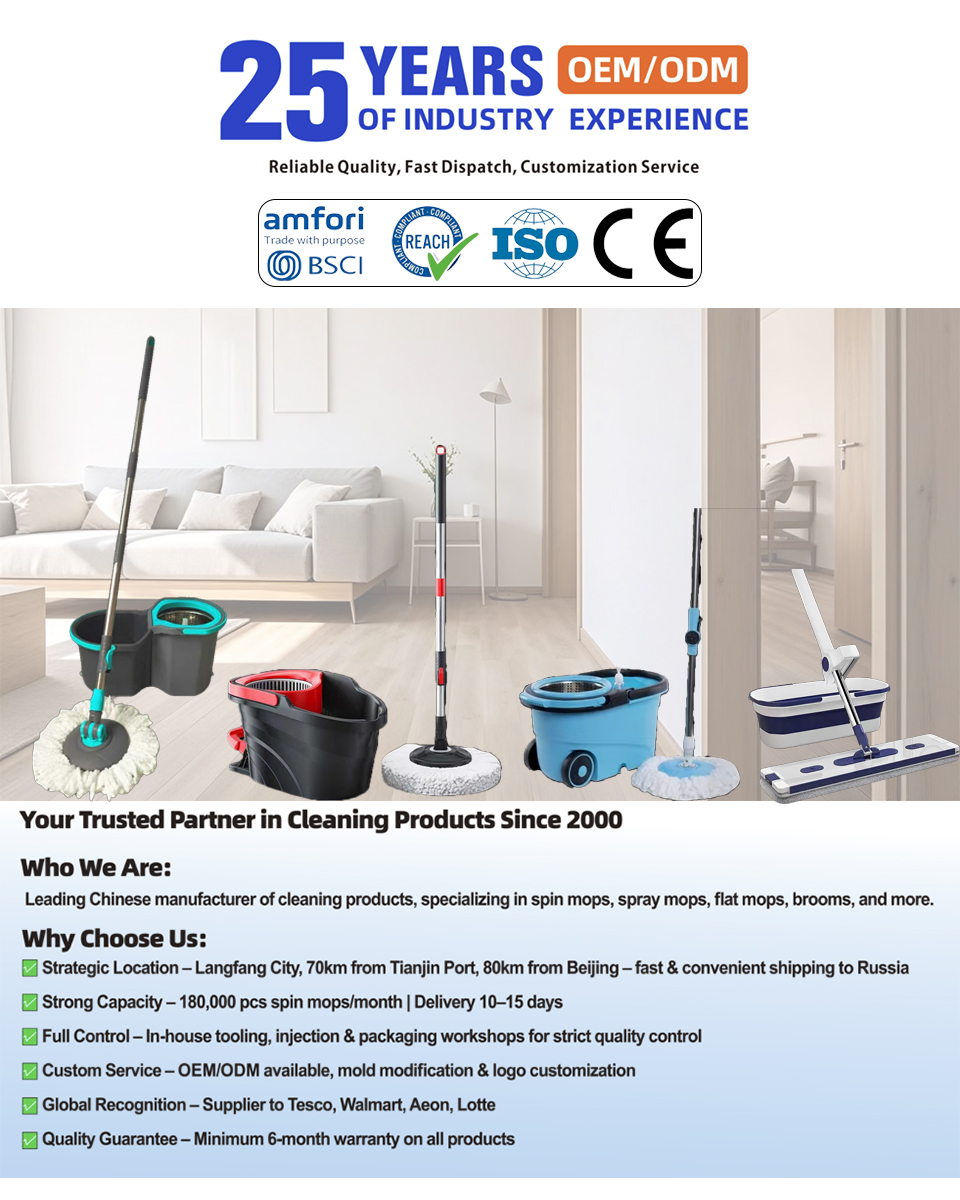
I run a spin mop factory in [City, China] . We are a real factory. You can video call us any time. You can check our address on Google Maps. You can ask for batch test data.
We are not the cheapest. But you will always know who you are buying from.
If you are a trader reading this — there is nothing wrong with what you do. Just be honest about it. Buyers appreciate transparency.
If you are a buyer — use these three methods on your next supplier. You might be surprised by what you find.
If you are sourcing spin mops, spray mops, or flat mops, we invite you to verify us.
We can provide:
A continuous video walkthrough of our factory
Our Google Maps address with street view
Batch test data from our last three shipments
???? Email: melinda.meng@linyumop.com
???? Website: www.linyumop.com
???? WhatsApp: +8615933363373
Mention “Factory vs Trader Article” and we will prioritize your request.

Subscribe our Newsletter
Tel.: +86 316 325 0883
Mob.: +86 159 3336 3373
E-mail: melinda.meng@linyumop.com
Add.: Bazhou Development Zone, Langfang City, Hebei Province, China
follow us


Copyright © Bazhou Linyu Household Products Co., Ltd. All Rights Reserved | Sitemap
Technical Support: